‘Green lab’ helps Oregon officers recognize marijuana-impaired driving
Published 7:00 am Saturday, March 7, 2026



‘Green lab’ helps Oregon officers recognize marijuana-impaired driving
On Wednesday, March 11 over 20 officers, troopers and deputies from across Oregon will participate in a “green lab” hosted by the Clatsop County Sheriff’s Department.
The lab, taught by Deputy Grant Shimer, is designed to help law enforcement officials recognize cannabis impairment in drivers. They do this by working with people who volunteer to get high under supervision.
Shimer went to Colorado for cannabis specific training, the only officer in the state to do so.
“I took that training, brought it back with me and composed this class I’m teaching,” said Shimer.
What is a green lab
Green labs are structured similarly to wet labs, where police officers apply classroom knowledge in testing for alcohol impairment. In green labs, they examine marijuana impairment.
Shimer said they do not learn any new testing techniques in the lab; they learned those in a prior course called Advanced Roadside Impaired Driving Enforcement. Some of the tests they learn in that course include asking a person suspected to be under the influence to put their finger to their nose or checking for eyeball convergence.
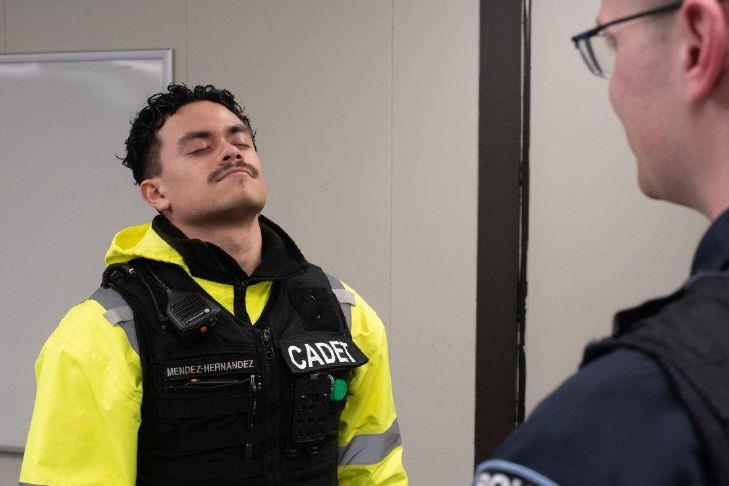
Another one is called the modified Romberg test which checks a person’s sense of body awareness, spatial movement and their inner clock. Those high on alcohol, marijuana and other depressants will perceive time slower than sober people.
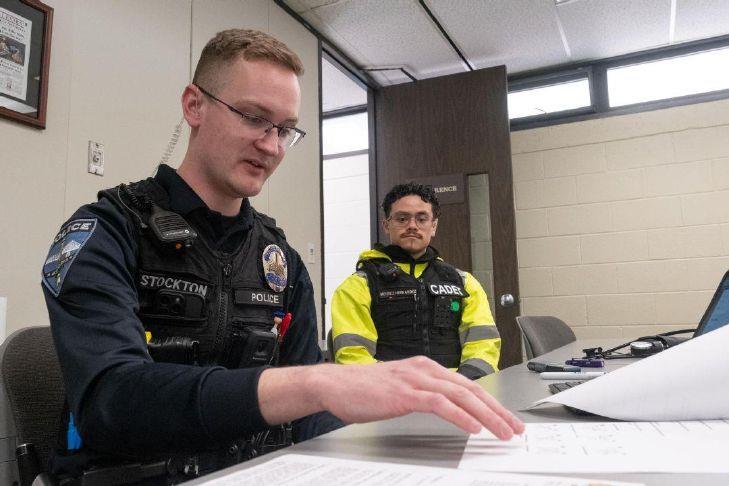
“You’ll administer those alternative tests to them just like if it was a wet lab but with people high on weed,” said Astoria Police Officer Zach Stockton. Stockton has participated before in one of Shimer’s previous green labs.
According to Shimer, a core component is helping officers understand that cannabis impairment is not physical the same way alcohol impairment is.
The lab itself involves at least four people who volunteer to get high for the officers. Often, the volunteers work at local dispensaries, Shimer said.
“it’s pretty fun” said Ashley Gunn, store manager at the Sweet Relief dispensary in Astoria and a participant in the lab.
How it works
Volunteers consume marijuana during the green lab training but they do not actually drive. First, officers ask the volunteers a series of questions while they are completely sober. Next, the volunteers go into a separate room and consume a small amount of marijuana and when they come back, officers ask the same questions and then administer field sobriety tests. The cycle continues as volunteers consume more to make their symptoms more pronounced.
Gunn said the volunteers also get a chance to learn about how the substance alters their perception.
“Marijuana effects your body a lot more than you think,” she said. “You don’t realize what marijuana is actually doing to your brain and your body.”
Why are they doing it
In Astoria alone, DUII (Driving Under the Influence of Intoxicants) arrests are on the rise year over year. According to Stockton, arrests have gone up from 54 in 2022 to 98 in 2025.
On one recent shift, an officer made three DUII arrests in one night, he said.
“Drug impaired driving is just way off the charts.”
According to Shimer, the green lab training provides valuable education for law enforcement officials who might only be looking for alcohol impairment.
“I see a lot of officers, troopers and deputies just not recognizing the cannabis impairment,” he said.
Shimer also says the training helps differentiate those who are impaired from people who are sober.
“I’m just trying to make sure that we aren’t arresting someone because they smell like weed and they’re having a bad day and they’re crying,” said Shimer.
He also said asking people who work at local dispensaries to volunteer for the green lab training program helps encourage communication, bridging a gap between people in the marijuana industry and law enforcement.
“My goal is to have (the volunteers) help us — to make sure we are not making improper or rash decisions.”