Water under the bridge
Published 3:30 am Tuesday, March 3, 2026




Compiled by Bob Duke
From the pages of Astoria’s daily newspapers
10 years ago — 2016
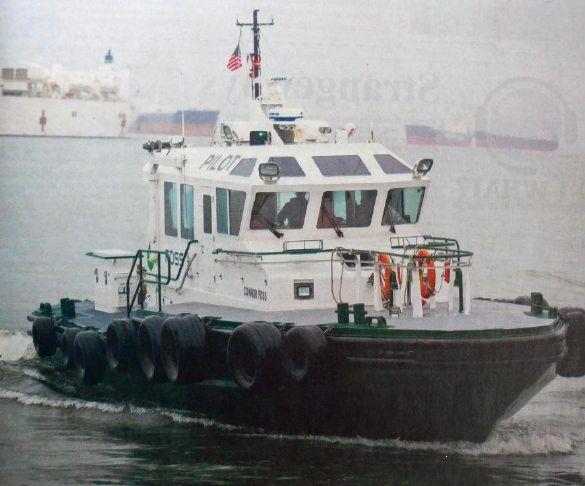
Ships passing through or anchoring off Astoria have become a part of the landscape as much as the Astoria Bridge or Saddle Mountain. Few often think about the people who guide the ships safely to teir destinations along the river.
Rick Gill, president of the Columbia River Pilots, an association of professional mariners, recently gave a talk in Astoria describing the life of a river pilot.
River pilots are not to be confused with bar pilots, who assist ships getting over the Columbia River Bar. Once the ships are through the bar, a river pilot is sent to help steer them the rest of the way. River pilots offer navigational instructions and expertise of the river to a ship’s captain.
Forty five river pilots are licensed through the state and U.S. Coast Guard to track commercial vessels on the Columbia River.
Gill, who worked as a river pilot for a decade, said a major challenge is maneuvering the ships through the narrow channels.
A commercial ship is 100 feet wide and the channel is often about 600 feet wide. If another ship is traveling the opposite direction at the same time, that does not leave much space.
“We don’t have a whole lot of room from here up to Portland,” Gill said. “A lot of places we are going, we only have 2 feet underneath.”
A ship is required to have at least 2 feet clearance or it must anchor and wait for high water.
Twenty years ago, 2006 – “We’ve burned the mortgage. We now own the trolley,” a beaming Mayor Willis Van Dusen recently announced to the Astoria City Council.
Known as Old 300, the Astoria Riverfront Trolley is the mayor’s pride and joy and a favorite of visitors and residents alike. The Astoria Riverfront Trolley Association (ARTA) had been leasing it from the San Antonio Art Museum for $1 a year.
But with concerns rising that someone else might come along and buy it, last August the Trolley Association borrowed $50,000 from the Bank of Astoria and made the trolley its own.
A select group of the top student robot-builders assembled Tuesday in physics instructor Pat Keefe’s bottom-floor laboratory at Clatsop Community College.
The team comprised of engineering, mathematics and other technologically gifted s students from Astoria, Warrenton and Jewell, is tasked with building a new underwater robot for the Maritime Archaeological Society to find shipwrecks around the mouth of the Columbia River and on the North Coast.
CANNON BEACH – Where better to begin the conservation conversation than Cannon Beach? With designation of the new Cape Falcon Marine Reserve, the city and its neighbors are at the forefront of environmental protections.
“Locally, the marine reserve is a great opportunity to talk about ocean conservation,” said Chrissy Smith, Friends of Cape Falcon coordinator. “The marine reserve gives us a place to come together and take a big, vast nebulous ocean and give it a boundary.”
“A Tide Change: Inspiring Engagement in Oregon’s Marine Reserves,” held by the Oregon Marine Reserves Partnership, included speaker from Oregon State University and researchers throughout Oregon. The event ended with a field trip to the recently designated Cape Falcon Marine Reserve.
50 years ago — 1976
The birthday of Finland’s famous epic poem, the Kalevala, was the occasion for a banquet in Suomi Hall Saturday evening. Finnish fare was served and the program included songs and poems in Finnish.
The Kalevala was published 141 years ago in 1835 by Dr. Elias Lonrot, a country physician who spent several years collecting and reducing to writing the poems dealing with Finnish folk heroes that for centuries had been handed down orally from generation to generation.
Since the epic poem of 23,000 lines has been translated into 19 foreign languages and is known throughout the world.
Finns everywhere are proud of the book and each year Astoria Finns celebrate its anniversary with a program aimed at stimulating preservation of Finnish culture.
Hundreds of sea birds were the victims of an apparently otherwise harmless oil spill that washed up on Oregon and Washington beaches over the weekend, the U.S. Coast Guard reported.
The heavy black oil washed up in small globs that clung to birds’ feathers and eventually dried and killed them, said Lt. Jim Vance of Air Station Astoria this morning.
Oil was reported in scattered sections of beach between Tillamook and Neah Bay, Wash. Heaviest concentrations on the North Oregon Coast were in the Gearhart and Cannon Beach areas, the Coast Guard said.
The source of the spill is unknown, but Coast Guard officials suspect a passing ship either spilled the oil or pumped it out sometime within the past few days.
The Clatsop County Developmental Training Center’s move to downtown Astoria last month from Tongue Point represents a high point in a long and enduring struggle to develop and expand a program for developmentally disabled adults in Clatsop County.
Barely two years old, the center for five years was only the dream of a small, dedicated group of volunteers connected with the Clatsop County Assn. for Developmentally Disabled Citizens.
If you think the worst of the recent bad weather is behind us on the North Coast, think again. The weatherman is predicting more of the same.
In fact, he says it may get worse.
The Portland Weather Bureau warns motorists to prepare for one to three inches of snow in higher elevations, beginning tonight.
Employees of one Astoria business have decided to start cleaning up their area of town and they hope the notion will spread to other sections of the city.
Five employees of Fiddlers Green family pub, who have dubbed themselves the Uniontown Cleanup Committee,” have taken on the job of preparing their stretch of Marine Drive for the coming of Bicentennial year tourists.
“We’ve done some walking and what you see is garbage,” explained member Pam Jenkins. “Blackberries and trash, when you live in Astoria and you pass it every day, you don’t see it. You aren’t aware of the eyesore.”
75 years ago — 1951
The Clatsop County forum wound up its discussion of what to do with the old Flavel home by appointing Dr. R.W. Kullberg, chairman of the Flavel memorial committee, a new group.
The committed was charged with establishing methods of arousing public interest in the Flavel house as permanent memorial and museum.
Some member of the forum seemed to feel there was a “well organized conspiracy” in the county to prevent those “sincerely” interested in the rehabilitation of the mansion from acting on any definite program.
Mr. Polly Bell reviewing the history of the Flavel house and other historic homes in Astoria declared that “if there had been a conspiracy for 50 years to eliminate Astoria’s historical sights and relics a better job couldn’t have been done than has been accomplished through carelessness and negligence of Astorians.” She deplore the lack of cooperation of the local newspaper and of businessmen.
The Clatsop County welfare board has approved a ten percent increase in monthly food allotment for welfare cases, as recommended by the state welfare commission.
The increase amounts to about $2.50 a month, and brings total food allotment to an adult living alone on welfare to $27 a month.
Despite heavy mobilization of the armed forces fish sales to the government have not approached the volume reached during the last war, a survey of local packers shows.
Furthermore, there is no indication that the government intends to increase its buying.
Six packers in the lower Columbia area are approved for government sales, but only four have been selling to the government lately.
Machinery for the new Astoria Plywood corporation mill is already beginning to arrive, although the bulk of it will not be due here until April.
Several motors and pumps have already been delivered and are being stored in the corporation’s machine shop building, formerly the planing mill plant of the Clatsop mill.
February was Astoria’s fifth consecutive month with excessive rainfall and brought one of the rainiest winters in local history near a climax.
February’s total precipitation was 13.78 inches, an excess of 4.74 above normal.
WASHINGTON. – President Truman’s water resources policy commission today recommended legislation which would “require” unified planning and common goals of all federal agencies participating in the development of the Columbia basin.
The commission said the Columbia basin still is “relatively immature,” despite expenditure of about $631 million on various projects. It describe the basin as the “last important physical frontier” in the United States.
“There need be little doubt as to the far-reaching effect of a completed program of development of the water resources of the Columbia basin,” the commission said.
Winter returned to Astoria over the weekend and made travel on highways in the county hazardous Sunday and during the early morning hours Monday.
State police today reported both the Lower Columbia and Sunset highways open and chains were not necessary. Police said the Sunset had about two inches of packed snow near the summit this morning but it was well sanded.