ODFW to hear pros and cons on crabbing petition
Published 11:58 am Wednesday, February 11, 2026
Crabbers and environmental groups clash over proposed changes
In 2025, four humpback whales were entangled in crabbing gear. One, a juvenile, washed up in Yachats before it was euthanized.
Entanglements like these are often tied to the Dungeness crab fishery. Recently, four environmental groups have petitioned to change the rules to protect the whales.
On Feb. 20, the Oregon Department of Fish and Wildlife Commission will hear arguments for and against a petition filed by the environmental groups. Stakeholders from both sides of the issue are invited to weigh in.
The petition is asking that significant changes are made that will affect the late commercial Dungeness crabbing season.
The petition asks ODFW to make several changes to the late season. Key changes include an amended depth limit from 40 fathoms (240 feet) to 30 fathoms (180 feet) and an earlier late season start — April 1 instead of May 1. In addition, the petition is asking for fishing practices to move to incorporate using ropeless “pop up” crabbing gear instead of traditional crabbing gear that uses a line and a buoy. The changes would also require ODFW to provide public notice of an entanglement within 48 hours after it is reported. The proposed changes, if approved, would go into effect in 2028.
“We had some concerns about the health of the humpback whale population, so we decided that there was a need for some additional regulation,” said Ben Grundy, an oceans campaigner with the Center for Biological Diversity.
The other environmental groups in the petition include Oceana, The American Cetacean Society and the Natural Resources Defense Center.
If the petition is accepted, the department will start a public rule making process to determine which elements of the petition they would like to incorporate into the new rules.
Petitioners say the proposed changes would help protect marine life, but some members of the local crabbing fleet in Astoria say the changes could have a negative impact on the fishery.
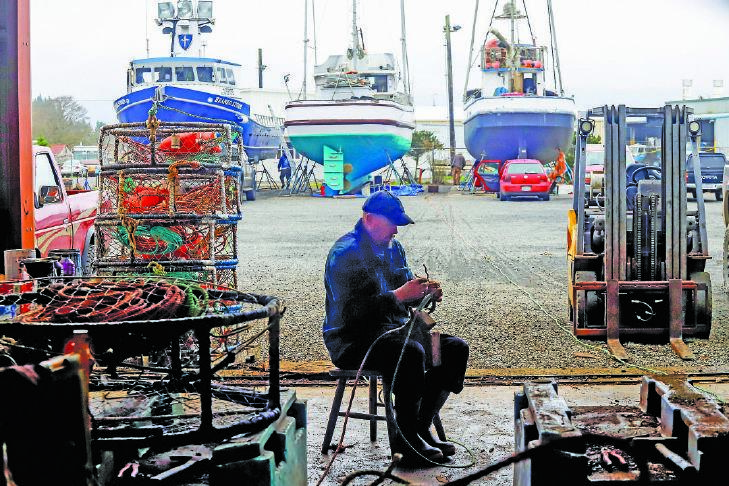
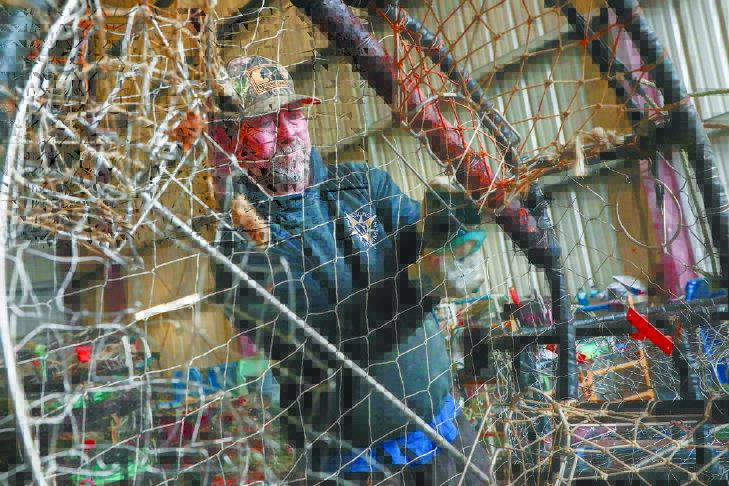
Traditional crab pots rest on the sea floor with a buoy on the surface and a rope, or line, connecting the two. This vertical line is what can cause an entanglement risk to marine life.
The pop-up buoys are different — they rest on the sea floor with the pot until it “hears” an acoustic signal broadcasted from a passing vessel which then brings the buoy to the surface.
According to Cristian Flagg, who works at Desert Star Systems, a pop-up gear manufacturer in California, the pop-up systems are already in use off the coasts of Australia and South Africa.
Ben Enticknap, a senior scientist and campaign director at Oceana, said using the pop-ups is a good way to keep both sides happy, to reduce entanglements and keep the fishery productive.
“We’re all for keeping people going if they’re using gear that is going to avoid entanglements,” he said. Grundy thinks that it is a matter of exposure to the new gear, as far as fishermen adopting a new technology.
However, some local fishermen disagree with the proposed regulations.
“It seems like a lot of the people pushing this whale stuff are really pushing for (pop-up gear) — but they’re not fishermen,” said Rob Seitz, a local commercial fisherman. “It’s impractical.”
According to Flagg, in quantities of 100 or more, the price of the pop-up pots starts at $720 per unit. In addition, the module that communicates with the pots costs around $8,000.
Seitz said it’s the high cost of the new gear that is prohibitive. That, plus moving the late season up, could put the smaller boats which crab during the late season out of the fishery.
Seitz said he currently pays $450 per traditional pot, including line and buoy.
“The people it’s going to impact are going to be the small boats trying to make a living,” Seitz said.
Mike Haggren, another local fisherman, agrees with Seitz.
“I think they ought to be trying to help people get to work instead of putting them out of work,” Haggren said. “You’re just further restricting these guys’ ability to try to make a living out of it.”
Ahead of the Feb. 20 meeting, ODFWC released the public correspondence about the proposed changes. In the emails, some members of the marine industry from across Oregon weighed in.
“Reject these proposals and work with fishermen on real solutions,” wrote CJ Beckman, one Astoria fisherman.
Another comment came from an Oregon conservationist, Spencer Lennard. “I strongly support all efforts to strengthen Dungeness crab extraction methods to reduce likelihood of entanglement of whales,” he said.
Enticknap maintains that amendments to the current rules could lead to the best outcome for both whales and crabbers.
“What we’re proposing are science-based solutions based on the whale’s biology.”