In One Ear: Two survived
Published 6:00 am Thursday, January 29, 2026
The Daily Morning Astorian of Jan. 27, 1886, posted the following notice: “At 1:30 tomorrow afternoon E. C. Holden will sell at auction the wrecked schooner Carrie B. Lake, the hull, furniture and tackle, as she lies.”
The “Annual Report of the Operations of the U.S. Life-saving Service” revealed that on the night of Jan. 3, the Carrie B., with a crew of five, was waiting off the coast north of Cape Disappointment to resume work the next day. Soon the weather turned ugly, with a stiff gale, rain and fog.
Everyone was below deck having supper except the man at the helm, who suddenly realized they were in shallow water. He called below to warn the captain, but was ignored. A few minutes later, the boat slammed into a shoal.
A boat was lowered, and all hands got in. They were only about 40 yards from the Carrie B. when the boat capsized, and the captain, the mate and cook drowned in the breakers. Crewman James Dunn made it back to the Carrie B. and climbed aboard.
Seaman Robert Robenson clung to the bottom of the capsized boat and made it to the beach. He was found by farmer E. B. Stone, who dispatched his son on horseback the 10 miles to Cape Disappointment to summon a rescue team.
The team, in the still-raging storm, brought a medicine chest and gear up Baker’s Bay to Ilwaco, Washington, where a mass of drift logs made landing and unloading difficult. A horse-drawn wagon arrived and hauled the men and gear up to the expected location of the Carrie B. — but they were still a mile short of their target.
After moving further north, the team could hear Dunn’s cries for help from the wreck. Two men waded out, narrowly missing being swept away, and managed to bring the crewman back to shore safely.
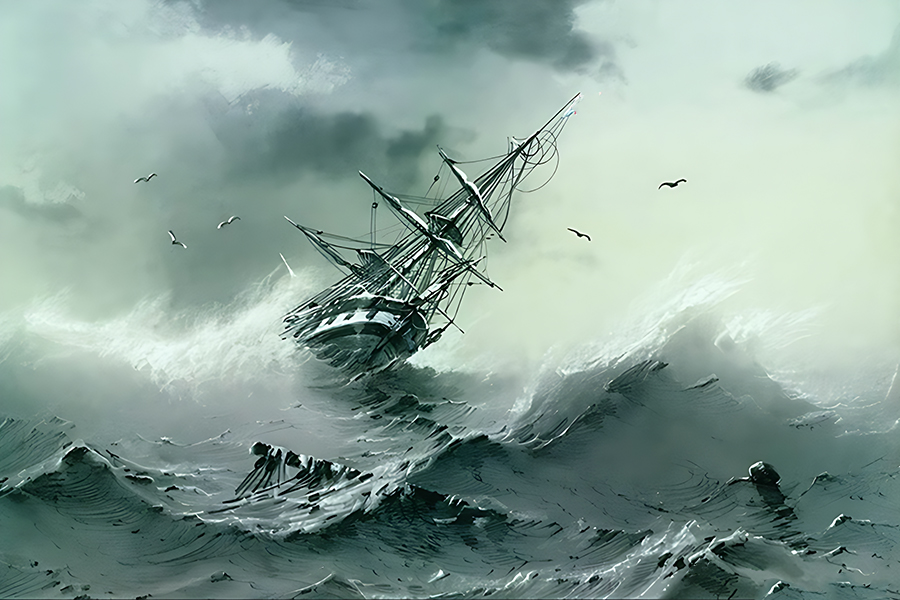
The conclusion of the U.S. Life-saving Service was terse: “Had the people remained by their vessel, they would all have been saved.” (Painting: Ivan Aivazovsky)