Clatsop County readies for PIT count
Published 6:29 pm Friday, January 23, 2026
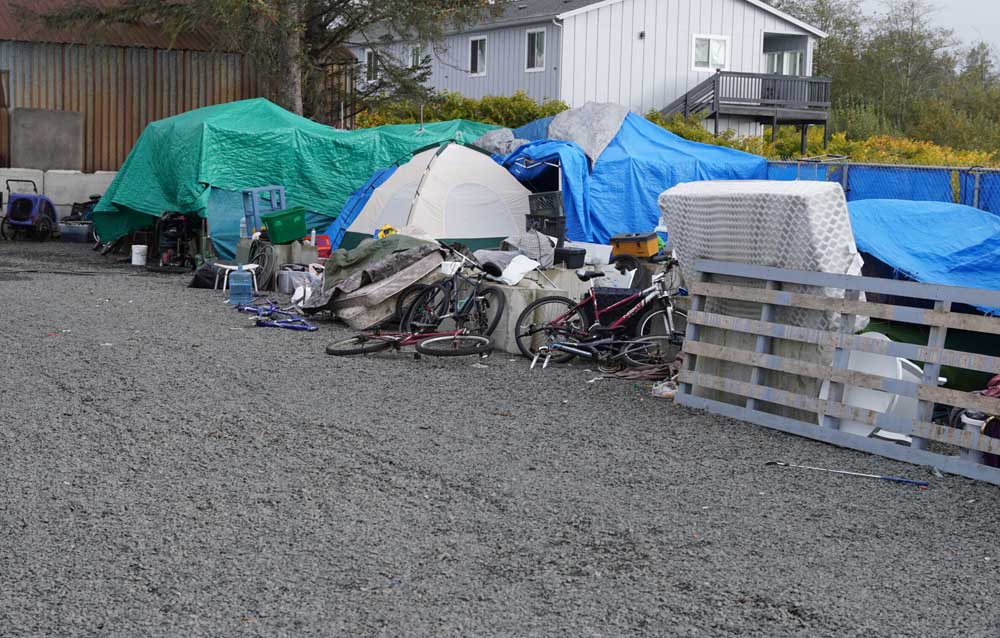
CCA collects data on Jan. 27
With the approaching 2026 Point in Time (PIT) count on Tuesday, Jan. 27, many community members doubt that recent developments in homelessness services will be enough to shrink what remains the highest homelessness rate in Oregon. Last year’s count had Clatsop County at 29.75 total homeless per 1,000 residents. Comparatively, Tillamook had 3.73 and Lincoln had 12.04. Clatsop County’s homeless population totaled 1,243.
The PIT count is a federally mandated count of sheltered and unsheltered people experiencing homelessness that takes place on one night in late January every year. Clatsop Community Action (CCA) is charged with collecting Clatsop County’s data, which is used by the U.S. Department of Housing and Urban Development to determine federal funding for homeless programs. The information is also submitted to the state of Oregon.
Clatsop County leads the state with the highest rate of homelessness in Oregon, a state where Governor Tina Kotek has twice extended the homelessness state of emergency she originally declared in 2023.
“We do have some folks (experiencing homelessness) who are ‘local,’ but we also see a large number of transient folks passing through, dropped off here by other law enforcement agencies or sent here on a bus from the Portland area,” said Astoria Police Chief Stacy Kelly.
However, some advocates dispute that people are being bused into Astoria.
“Unless (Clatsop County) is their county of origin, they’re not being bused in,” said Emily Engdahl, founder of the mutual aid volunteer organization Astoria Harvest. She contends that the transient folks Kelly speaks of are those who come to town for local treatment programs and have limited resources when they finish.
In a year with government shutdowns, SNAP cuts, and rent increases, local organizations, including CCA, LiFEBoat Services, and the Clatsop County Mutual Aid Network, have expanded existing programs and implemented new ones. CCA initiated its Utility Relief Program in October, providing water and sewer utility assistance to residents in need.
The Community Action Team (CAT) expanded its Single-Room Occupancy (SRO) Home program, growing to nine rooms across three houses. These private, lockable rooms inside shared houses provide safe, stable homes for residents to live while case managers and peer mentors help them get back on their feet.
The Clatsop County Multi-Agency Coordination (MAC) Group, tasked by the state to deploy a regionalized plan to address homelessness, exceeded both of its 2025 goals. By its June deadline, the MAC group served 223 households at risk of losing housing with case management services, rent deposit, or rental assistance and created 95 shelter beds.
It remains to be seen how these initiatives, among other routine services, will affect Clatsop County’s homeless numbers. Given that an estimated 6,899 people in Clatsop County faced difficulty accessing benefits during the 2025 government shutdown and local rent increased by nearly 13 percent over the year, per Zillow, some advocates are skeptical that efforts will significantly reduce the PIT count. In fact, Kelly reported that calls about illegal camping nearly doubled from 2024 to 2025, causing frustrated officers to leave the department.
Advocates like Engdahl are critical of the City of Astoria and CCA, which control most of the local funding for homelessness initiatives. “During the 17th, 18th, and 19th (of December), we were pressing on them to open up the emergency shelter that CCA has $20,000 for from the city,” said Engdahl. “They did not (open the shelter).”
On Dec. 17, the Oregon Department of Emergency Management activated the Emergency Coordination Center to level three in response to upcoming heavy rainfall, potential flooding, and increased landslide risk. Engdahl said there were hypothermic conditions, and the only open zero-barrier shelter, LiFEBoat, was full, putting the homeless population in danger.
Engdahl worries that a greater population is exposed to the elements after the police swept people out of car camps in late December. The mutual aid network suspects that this was done strategically to “up the PIT count numbers, because if you have people who are camping in a car, you’re not going to necessarily know to drive around and PIT count those people.”
CCA could not be reached for comment regarding its PIT count plans by press time, and Chief Kelly said that APD “does not assist” with the PIT count. He describes APD’s goal as “to connect people with services and gain compliance with our camping ordinance, which permits camping in certain places at certain times.”
Beyond January, community advocates and local agencies will continue to refine their strategies to address homelessness. CCA started developing its 2026-2030 Strategic Plan in May, and the Statewide Shelter Program, signed into law by Governor Kotek in July, and its associated $204.9 million, will begin to be implemented this year. Oregon Housing and Community Services will enter into an agreement with a Regional Coordinator to supervise the program locally by May 2026, laying the foundation for the initiative’s eventual outcome.
A large determinant of 2026 homelessness initiatives will be the results of the Jan. 27 PIT count. As the yearly count approaches, advocates hope that it will be conducted in a comprehensive way that prioritizes the safety and well-being of our neighbors experiencing homelessness.