A European green crab invasion
Published 9:00 am Wednesday, January 21, 2026
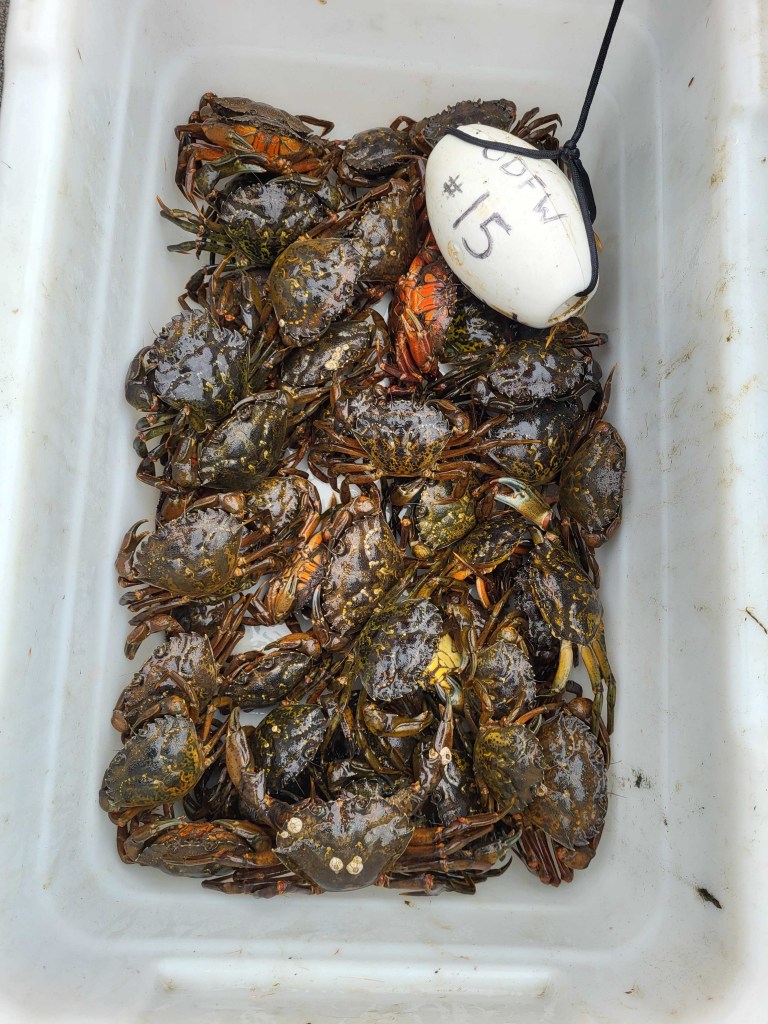
Green crabs threaten West Coast ecosystems, livelihood and tribal traditions
European green crabs, an invasive species first detected on the West Coast in the late 1980s and established in Washington in the 1990s, are spreading rapidly along the Pacific coastline, prompting urgent action from state agencies, tribal nations and researchers.
Known for their voracious appetite and adaptability, these crabs threaten native shellfish, eelgrass habitats and traditional food sources, while also posing potential economic risks to coastal communities.
The crabs are now firmly established in large numbers in Willapa Bay, Grays Harbor and Makah Bay. Smaller, sporadic populations have been detected along western shorelines up into Canada.
“Trapping to control these infestations and limit population growth is ongoing,” said Mikaela Legarsky, a communications specialist with the Washington Department of Fish and Wildlife. “Those efforts are led by coastal shellfish growers, counties, tribes, WDFW and other permitted partners.”
Since the start of the 2025 trapping season, WDFW and more than 40 partner organizations have deployed over 37,600 traps — removing more than 757,000 green crabs from Washington waters and nearly 18,000 from the Salish Sea, which crosses the U.S. Canada border.
“Early detection monitoring is underway throughout the Washington coast and Puget Sound, as well as control trapping in areas where green crabs are established or have the potential to become new hot spots,” Legarsky said.
A voracious invader
The European green crabs, which can range in color from green to red, orange, or yellow, are highly adaptable. They can tolerate a range of salinities but prefer shallow estuaries, bays and tide flats. Their spread along the West Coast has been aided by larval transport in ocean currents and warmer water temperatures linked to climate change.
“Juvenile and adult crabs exist primarily in our bays and estuaries,” said Eric S. Anderson, shellfish project leader with the Oregon Department of Fish and Wildlife. “They don’t survive well in the open ocean or in freshwater systems. That’s why bays like Yaquina and Coos have the highest abundance, while others like Alsea Bay remain lower. We’ve seen increases since we began trapping in 2022.”
Anderson added that larval transport patterns, once heavily influenced by El Niño years, are now more consistent as northern populations establish themselves. “We get larval transport from the north as well and their recruitment is no longer strongly tied to El Niño,” he said.
Ecological and economic impacts
Research suggests that, despite their abundance, green crabs in Washington and Oregon have not yet caused measurable ecological harm. But experts warn that could change quickly.
“Right now, even in places where they are most abundant, the research suggests they are not yet having a measurable impact,” said Emily Grason, marine ecologist and Crab Team program lead with Washington Sea Grant. “However, all the evidence from other locations where they’ve become invasive suggests they have the potential to impact shellfish harvest and eelgrass—which indirectly affects economically important species like salmon and crabs.”
European green crabs’ wide-ranging diet makes them particularly disruptive.
“They prefer to be predators and eat the same seafood we like: bivalves, oysters and small crabs,” Grason said. “In becoming extremely abundant, they create ripple effects throughout the marine shoreline. Shallow marshes, pocket estuaries and tide flats — habitats critical for salmon recovery and shellfish beds are most impacted. European green crabs can dramatically change the ecology, food webs and even the physical features of these habitats.”
Grason said the crabs are primarily removed through trapping, which is resource-intensive but currently the most effective management strategy.
“Most crabs are frozen and composted. A small subset is still valuable for research — genetics, population studies and other analyses,” she said.
Tribal impacts and traditional foods: ‘Without these resources, we wouldn’t be where we are today’
Shoalwater Bays Indian Nation Natural Resources Manager Austin McCloskey said the green crab has huge impacts on culturally significant resources if left unchecked.
The Shoalwater Bay Indian Tribe Department of Natural Resources has been working diligently to reduce the number of EGC present in the water since 2021, capturing more than 329,000 European green crabs between 2021-2025.
“EGC trapping is essential in protecting and preserving the Tribes’ natural resources for future generations,” he said.
After the European green crab is trapped, the crab is utilized as compost for tribal gardens and McCloskey said the Tribe is always thinking of new ideas to utilize the invasive species.
“With EGC, it’s great to take something that was causing damage to the ecosystem and utilize it for something that benefits the Tribe — adding another aspect to food sovereignty and protecting the Tribe’s way of life, “ he said.
McCloskey said Shoalwater Bay Indian Tribe has always played a role in protecting coastal ecosystems and will continue to do so for generations.
“The cultural and historic resources have not only been a part of the Tribe’s survival but also a part of who the Tribe is today,” he said. “The Tribe’s natural resources play a huge part in food sovereignty and protecting those resources is imperative.”
Shoalwater Bay Indian Tribe Chairman Quintin Swanson said, as the original stewards of their land, the people of the Tribe have subsisted on the natural resources that their reservation provides them for many generations.
“All of our decisions and actions today keep the protection of our land and its resources at the forefront, as preserving our people’s ability to sustain themselves and the health of our ecosystem are vital to preserving our culture and our way of life,” Swanson said.
For the Chinook Indian Nation, European green crabs are both an ecological and a cultural concern.
“European green crabs destroy native species by preying on juvenile shellfish and competing for food, threatening local populations and devastating oyster farms,” said Rachel Cushman, secretary/treasurer of the Chinook Indian Nation. “For our community, shellfish and crab are traditional foods that we and our ancestors have relied on for generations. European green crab cuts off our access to them.”
Cushman stressed that federal recognition is critical for tribes to fully manage invasive species.
“Federal recognition would allow us to access direct resource management funding,” she said. “Currently, we can’t apply for tribal invasive species grants or fully participate in federal restoration projects. With recognition, we could secure mitigation and monitoring grants and respond quickly when green crabs are detected.”
Cushman noted that local partnerships with the Columbia River Land Trust and Canicum Watershed Council have helped support stewardship and conservation work, but only federal recognition would provide stable authority and funding to protect ancestral lands, waters and traditional foods at scale.
“Recognition would empower us to manage and protect our ancestral lands using sustainable practices our people have relied on for generations,” she said. “It would allow us to fully steward natural resources like fish and shellfish in ways that strengthen ecosystems and support a healthy local economy. When these resources are properly protected, everyone benefits — from fishermen and harvesters to small business owners and families throughout the region.”
Management approaches in Oregon
Along the Oregon Coast, ODFW has taken steps to limit European green crab populations. Recreational harvesters can now take up to 35 European green crabs per day with a valid shellfish license. They are edible, are used in broth or soft-shell recipes, and some consider them as delicacies. Conservation-based culling is also allowed under letters of authorization and commercial harvests are now permitted with restrictions.
“The best way to identify them is by counting five spines on the outside of each eye,” Anderson said. “They aren’t always green — they can also be red, orange, or yellow.”
Washington’s proactive response
Washington has become a national model in managing the species.
“Washington has arguably done more than any other state to manage the European green crab invasion effectively,” Grason said. “The state supported proactive monitoring before any confirmed detections, declared an emergency and marshalled significant financial resources when populations increased. The deep commitment across tribes, shellfish growers and stewardship groups is what makes Washington’s approach a standout globally.”
Still, managing green crabs remains difficult.
“There isn’t much of a roadmap for what ‘success’ looks like,” Grason said. “There is always more work to be done, but the tradeoff that no single group can decide for everyone is where the balance lies between the cost of the work versus other important resource needs.”
Volunteer efforts and community involvement
Volunteer programs are vital to early detection. Washington Sea Grant’s Crab Team trains community members to monitor shorelines, while Molt Search, a search and detection system, encourages residents to report shed shells/green crab molts. These programs allow researchers to identify new infestations quickly and target management efforts efficiently.
Data gaps and next steps
Monitoring remains a challenge. Cushman noted that the Chinook Nation’s territory stretches from Tillamook Head to the north shore of Willapa Bay, a large area with limited monitoring capacity. As of August 2024, only three to four green crabs had been captured in the Columbia River, though populations could be higher.
“The lack of monitoring capacity has been a limitation,” she said. “Federal recognition would allow us to fully steward these resources, strengthen ecosystems and protect traditional foods.”