Oregon lawmakers, in move against Trump, aim to empower residents to sue federal agents
Published 12:56 pm Friday, January 9, 2026
By YESENIA AMARO
oregonlive.com
Two Oregon Democratic lawmakers plan to introduce legislation that would allow people to sue federal agents for violating their constitutional rights, such as unlawfully entering their home or car.
If their push is successful, Oregon would join about half a dozen states that have enacted this kind of law.
Reps. Lesly Muñoz of Woodburn and Ricki Ruiz of Gresham plan to introduce the bill during the legislative session that begins Feb. 2, following what lawmakers described as federal agents’ violations of the Fourth Amendment’s protections against unreasonable searches and seizures.
Muñoz, the chief sponsor, said the bill sprang from community meetings she’s held with people directly impacted by immigration enforcement, which has ramped up in Oregon since the fall. Contrary to the Trump administration’s claims that it is only targeting undocumented people with criminal records, Muñoz said immigration agents appear to instead be indiscriminately targeting people of color, regardless of their immigration status or past actions.
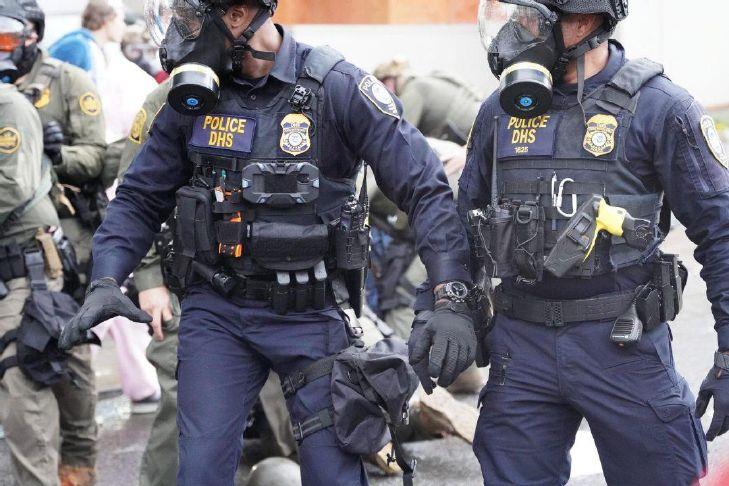
Sponsors point to several examples of what they consider civil rights violations. In October, Ruiz pointed out, federal agents pushed through the locked door of a Gresham family’s apartment with rifles drawn, then arrested the wrong men after the person they were initially looking for had fled. And an immigration agent in Salem seized a woman’s keys and purse after she recorded the agents’ license plates, and the woman had to pay for a tow truck to remove her car from the street, Muñoz said.
“Right now, when federal agents violate your Fourth Amendment rights in Oregon, there’s zero accountability,” Muñoz said in a statement last week.
The Federal Tort Claims Act allows people to sue the federal government but not individual agents, Muñoz said. The Westfall Act provides federal employees immunity from legal action that arises from their professional work.
The Oregon bill would attempt to let Oregonians sue individual agents who violate their Fourth Amendment rights, Muñoz said. It would apply only to federal agents, not state or local police. The bill also wouldn’t block lawful law enforcement or prevent federal agents from executing valid warrants, Muñoz said.
The proposal is sure to face scrutiny.
“The key issue is whether states can impose liability on federal actors at all,” said Vikram David Amar, endowed chair and distinguished professor at the UC Davis School of Law who has written about a similar new law in Illinois.
The Illinois law allows residents to sue “any person” who “knowingly engages in conduct that violates the Illinois Constitution or the United States Constitution” while conducting immigration enforcement. The Trump administration quickly sued Illinois Gov. J.B. Pritzker over the law last month, arguing it is an “attempt to regulate federal law enforcement officers” and that it violates the Supremacy Clause of the U.S. Constitution.
Harrison Stark, senior counsel and director of special projects at State Democracy Research Initiative at the University of Wisconsin Law School, said state laws have historically allowed Americans to hold federal agents accountable for violating their rights.
That’s how it worked before the Federal Tort Claims Act and the Westfall Act existed, Stark said. While those two laws changed the landscape, there’s an exception in the Westfall Act that allows legal action against a government employee who allegedly violates the U.S. Constitution.
“This provision is pretty much untested…There has not been much litigation about this at all,” he said. “But states like Oregon have really strong arguments that the Westfall Act and the Federal Tort Claims Act allow for exactly this.”
Muñoz said she has been communicating with legislative legal counsel to make sure the bill passes muster. She acknowledged in a 13-page list of questions and answers about the bill that it poses some “litigation risks” but also said that “doing nothing guarantees the status quo continues.”
The bill, which sponsors have dubbed the Protect Your Door Act, would also take a proactive approach to prevent federal agents from entering churches, schools and hospitals, Ruiz said. The Trump administration last year moved to undo policies that prevented U.S. Immigration and Customs Enforcement officers from making arrests at those sensitive locations.
Muñoz said the bill would also require federal agents to give local authorities a 48-hour notice before any immigration activity in their jurisdictions.
“It’s really important,” Ruiz said of the bill. “I’m always reminded of the words, no one is above the law.”