Huff’s posts: What’s the word on the street? Word up.
Published 9:30 am Friday, January 2, 2026

Yawn.
I’m not tired — just eye-rollingly unimpressed.
Why, you ask?
Well, it’s about the words of the year. Just like all of y’all, I like to stay up with what all the kids are saying, to show I’m still jiggy with it, that I really do have rizz.
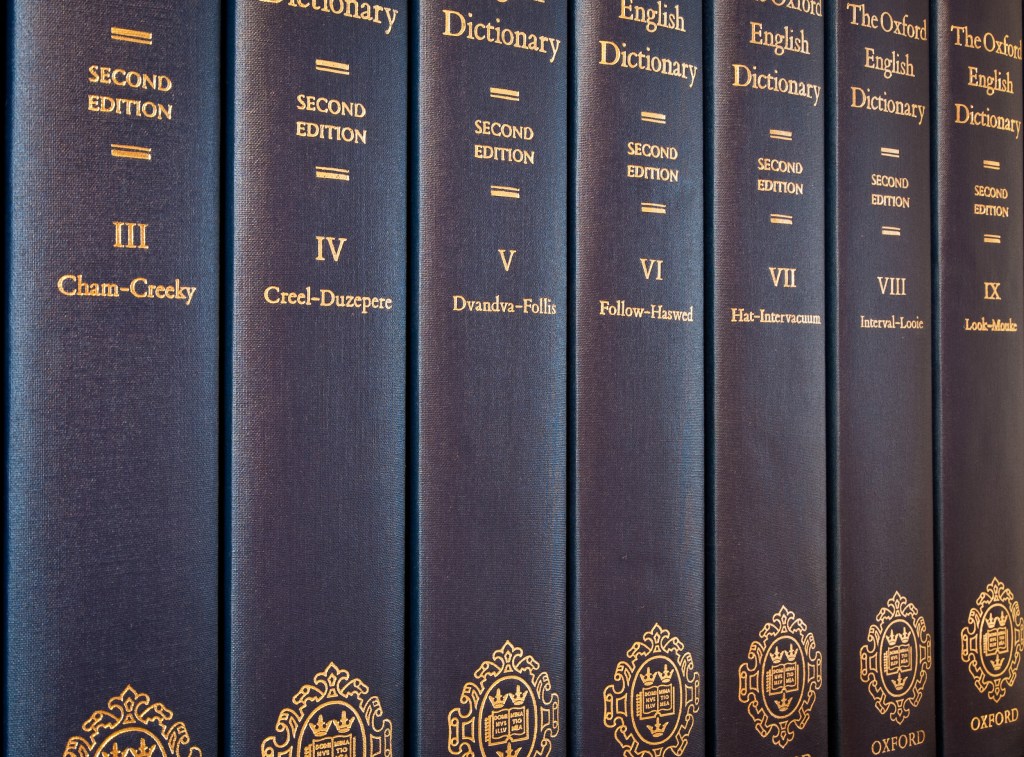
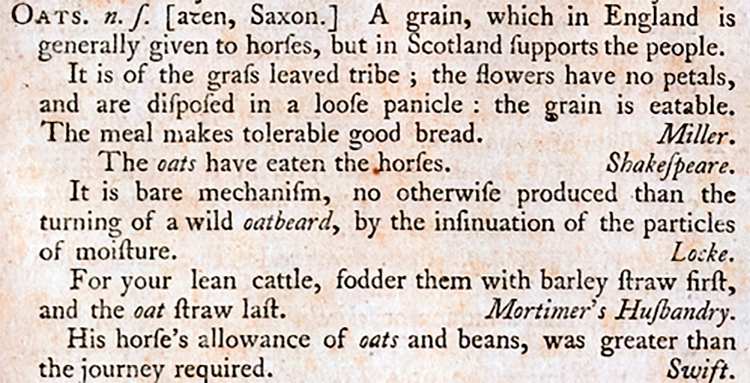
I mean, I deal with words. I guess you could say words are my tools of the trade. So I am always interested in finding out what the dictionary people come up with as their crown jewels of the year, so to speak.
Hold onto your Thesaurus (is that still a thing?) and take a trip with me down dictionary lane.
Brain rot is so 2024.
And this year the 67 thang is just the rage bait I need. It’s all just a bunch of slop anyway, trying to push me to trip into vibe coding or make me parasocial or something.
See that paragraph up above? It features five official 2025 Words of the Year (WOTY). I’m not quite sure I used them in a sentence properly, but they are all there.
And while “jiggy” was never a WOTY, “Gettin’ Jiggy Wit It,” a very popular song by Will Smith in 1997, brought the word to the masses where it was uttered ad nauseum.
“Rizz,” on the other hand, was the Oxford Dictionary’s WOTY in 2023. It was first coined by influencer Kai Cenat who used the term on Twitch and it spread across social media by way of TikTok, etc. According to Oxford, it means having charisma. According to Cenat, it means having “game.”
“Brain rot” was Oxford’s WOTY for 2024. In case you’re not up to speed with its definition, Oxford says it’s “the supposed deterioration of a person’s mental or intellectual state, especially viewed as the result of overconsumption of material (now particularly online content) considered to be trivial or unchallenging. Also: something characterized as likely to lead to such deterioration.”
Riiiight.
And now let’s get down to the nitty gritty and trot out the WOTY list for 2025 in detail, getting definitions and context so we know what we’re talking about.
The term “67,” which is dictionary.com’s WOTY, is pronounced “six seven,” not “sixty-seven.” What does it mean? Well, nothing, really. It was first a lyric in the song “Doot Doot” by the rapper, Skrilla. Then social media got a hold of it and bam. Went viral as they say, from people using it to describe the NBA player LaMelo Ball (who is six-foot-seven), to a kid now known as “67 kid” who used it at his school’s basketball game. And so on and so forth. It’s more of “an inside joke” that is described as “nonsensical” and “context flexible,” according to a Facebook video posted by dictionary.com. When I asked my grandkids what it meant, they kind of laughed and then said, “oh, nothing, really.” See what I mean?
“Rage bait,” which is Oxford’s WOTY for 2025, is easier to understand but harder to swallow. It is defined as “online content deliberately designed to elicit anger or outrage by being frustrating, provocative, or offensive, typically posted in order to increase traffic to or engagement with a particular web page or social media content.”
If you want to see actual examples of it in real life, just visit our website at dailyastorian.com and take a look at some of the comments posted there. Sigh.
The “human editors” over at Merriam-Webster crowned “slop” as their WOTY. Here’s what they have to say about it. “We define slop as ‘digital content of low quality that is produced usually in quantity by means of artificial intelligence.’ All that stuff dumped on our screens, captured in just four letters: the English language came through again.
“The flood of slop in 2025 included absurd videos, off-kilter advertising images, cheesy propaganda, fake news that looks pretty real, junky AI-written books, ‘workslop’ reports that waste coworkers’ time … and lots of talking cats. People found it annoying, and people ate it up.”
Yup.
The Collins Dictionary folks picked “vibe coding” as their WOTY. What’s that, you ask? Here’s their explanation. “Tired of wrestling with syntax? Just go with the vibes. That’s the essence of vibe coding, Collins’ Word of the Year 2025, a term that captures something fundamental about our evolving relationship with technology. Coined by AI pioneer Andrej Karpathy, vibe coding refers to the use of artificial intelligence prompted by natural language to write computer code. Basically, telling a machine what you want rather than painstakingly coding it yourself. It’s programming by vibes, not variables. While tech experts debate whether it’s revolutionary or reckless, the term has resonated far beyond Silicon Valley, speaking to a broader cultural shift towards AI-assisted everything in everyday life.”
And finally, at least for this column’s exploration on the subject, we come to “parasocial,” Cambridge Dictionary’s WOTY. It is an adjective, they say, “involving or relating to a connection that someone feels between themselves and a famous person they do not know, a character in a book, film, TV series, etc. — or an artificial intelligence.”
Hmmm. Cambridge goes on to give examples, including how millions of Taylor Swift fans identify with her song lyrics of heartache and desire and how those same fans felt a strong bond with Swift and footballer Travis Kelce and their romance — even though most had never met either one or even come within a football field length of the two.
Or how podcast hosts can seem like our real best buddies when they confess their deepest and darkest. Or how people can feel like their ChatGPT bots are their best friends — and in some cases, lovers.
Yeeks.
And while the American Dialect Society hasn’t yet chimed in with their vote for 2025 — they do that at their annual conference each January — here are some blasts from the past, words they chose back in the day, from 1990 to the year 2000. You might find them rather quaint, as I did. And if you’re interested in more, you can find a complete list of their annual WOTY through 2024 on their website at americandialect.org.
1990: bushlips — insincere political rhetoric
1991: mother of all – greatest, most impressive.
1992: Not! – expression of disagreement.
1993: information superhighway — network linking computers, television, telephone, and other electronic means of communication.
1994: (tie) cyber, pertaining to computers and electronic communication, and morph, to change form.
1995: (tie) World Wide Web on the Internet, and newt, to make aggressive changes as a newcomer.
1996: mom as in soccer mom, newly significant type of voter.
1997: millennium bug, also known as Y2K bug or Y2K problem, that causes computers to think that the year after 1999 is 1900.
1998: prefix e- for “electronic” as in e-mail and newly prominent e-commerce.
1999: Y2K.
2000: chad, a small scrap of paper punched from a voting card.
Also chosen in January 2000: Word of the Decade: web. Word of the Twentieth Century: jazz. Word of the Millennium: she.
So take my word for it, words are just words. … Let’s keep the conversation going, shall we?