Oregon community college advances plan for maritime simulator
Published 5:28 pm Wednesday, December 31, 2025
By AISLIN TWEEDY
The Astorian
According to Clatsop Community College President Jarrod Hogue, the college is moving forward with plans to develop Oregon’s first maritime simulation training center. It will position the college as a hub for workforce development, he said, as maritime employers across the state face growing training and certification demands.
The proposed simulator would replicate the bridge of a large commercial vessel, using 360-degree visual displays and realistic navigation systems to allow students and working mariners to practice emergency scenarios plus ship handling, collision avoidance and docking. Plans also include tugboat simulators that would allow multiple operators to train together in coordinated maneuvers.
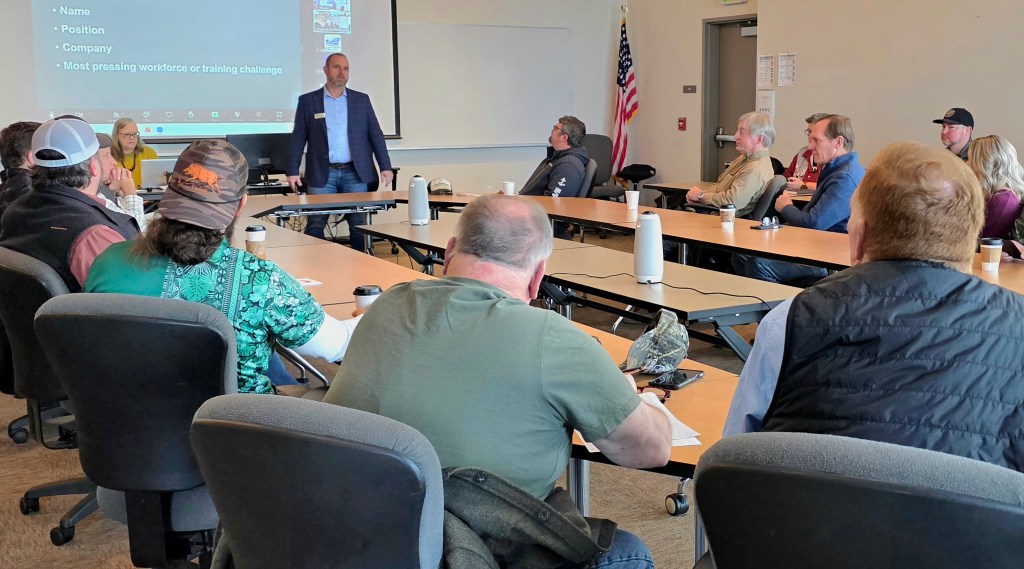
Hogue convened a summit with maritime industry leaders from across the region on Friday, Dec. 12 to gather input on the proposed simulator and ensure the project aligns with real-world industry needs. The summit brought together representatives from maritime organizations, shipping companies and workforce partners to discuss training gaps, safety needs and long-term workforce challenges.
“Our goal is to listen first,” Hogue said. “As we pursue a state match grant of up to $8 million, it’s critical that what we build truly serves industry needs. This summit was about making sure our vision aligns with the expectations of the professionals who will use this training and hire our graduates.”
Industry participants emphasized a statewide need for maritime simulation training. Oregon currently has no such facility, requiring students and professional mariners to travel to Washington or California for simulation-based assessment, certification and advanced training.
“Simulation lets you practice complex scenarios repeatedly in a cost-effective way without the risks of being on a diesel-powered vessel,” Hogue said. “It gives students and mariners across our region access to advanced training while supporting local businesses.”
Discussions during the summit focused on the types of simulations needed to support the Pacific Northwest, including full-mission bridge operations, tug and assist vessel training, river navigation on the Columbia, and coastal and port approaches. Industry leaders stressed the importance of high visual realism, accurate geographic modeling and the ability to adapt the system as vessel technology evolves.
Clatsop Community College is Oregon’s designated maritime training provider, offering U.S. Coast Guard-approved education, licensing and certification. While its degree program enrolls about a dozen students each year, the college serves 400 to 500 mariners annually through license upgrades and required credentialing.
The college’s Marine and Environmental Research and Training Station, or MERTS campus, includes a three-story maritime training structure designed to simulate shipboard conditions, complete with an engine room and nontoxic smoke for marine fire response training, as well as a 50-foot training vessel. However, the primary Maritime Sciences Building, constructed in 1996, is showing its age, said Hogue, with failing siding and roofing that require modernization.
The Oregon Legislature has approved up to $8 million in matching funds for improvements to the Maritime Sciences Building and program. To access the state funding, the college must raise between $2.5 million and $3 million locally, a fundraising campaign scheduled to begin in January. The funds must be secured within the next year.
If completed, Hogue said the simulator would not only strengthen workforce training but also serve as an economic driver for the region by attracting out-of-state mariners for certification and professional development.
“We see this as more than a training tool,” Hogue said. “Trainees staying in our hotels and eating at our restaurants support the local economy while they’re here learning.”
Key next steps identified at the summit include forming an industry steering committee, maintaining regular check-ins with maritime employers, engaging potential donors and partners and expanding outreach to high schools and community groups. Summit participants noted that maritime careers are often high-paying and stable and do not require a traditional four-year degree, yet remain underrepresented in career counseling conversations.
“This project is about partnership,” Hogue said. “By working side-by-side with industry, we can build a training resource that supports workforce development and ensures the maritime sector in our region continues to thrive.”
Clatsop Community College will continue refining the project’s scope as it advances fundraising and prepares for potential construction and simulator installation following the conclusion of the campaign in 2026.