Capital Chatter: The power of a plan
Published 10:34 am Monday, December 15, 2025



A dozen years ago, I went back to school and earned a master’s degree in management through Southern Oregon University.
I had several excellent professors. One in particular emphasized the importance of having a business plan. If I recall correctly, the data showed that the existence of such a plan was even more important than whether it was a good or a not-so-good plan. Regardless, the plan got everyone rowing in the same direction.
I don’t know that the same can be said for government. For example, decades of statewide plans have not resolved homelessness in Oregon.
Lots of plans
And when it comes to Oregon’s wavering economy, everyone seems to have their own plan.
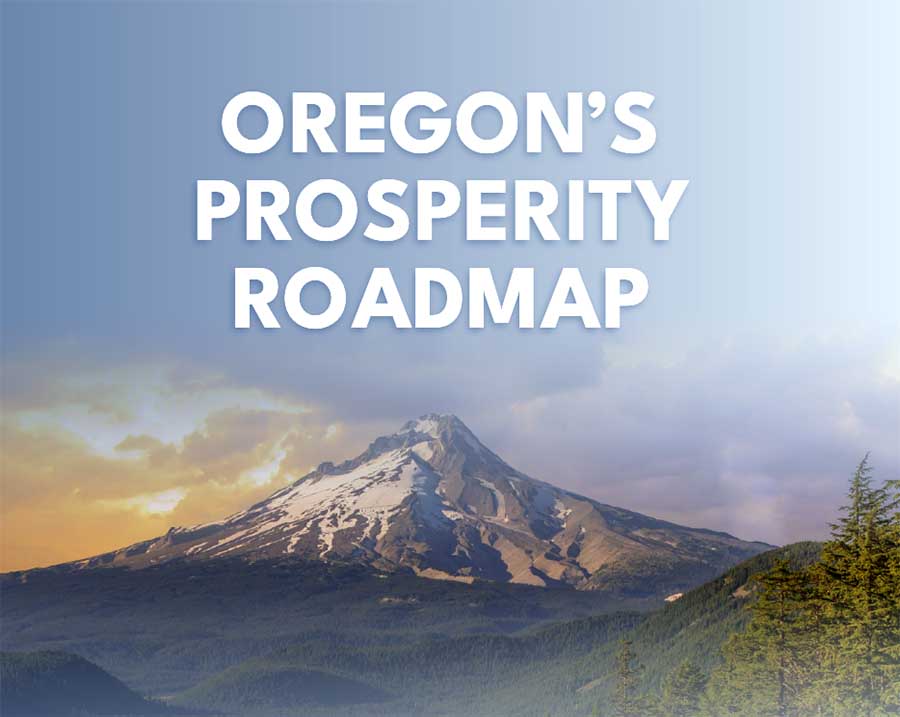
Gov. Tina Kotek recently released her “Prosperity Roadmap.” As with Kotek’s Nov. 19 “Executive order on reducing gas emissions and advancing Oregon’s clean energy future,” it was lofty in its goals but seemed short on specifics for achieving them.
On Dec. 8 in Portland, the annual Leadership Summit brought together business leaders, politicians, and others to discuss improving Oregon’s business and economic climate. Again, worthy aspirations but not a ton of specifics.
During last month’s Legislative Days at the State Capitol, various committees discussed taxes and the business climate.
The co-chairs of the Legislature’s budget-writing committee — Sen. Kate Lieber and Rep. Tawna Sanchez, both Portland Democrats — followed up with a guest opinion in The Oregonian: tinyurl.com/OR-GOP-rebuttal. Discussing the state’s projected budget shortfall, they wrote, “Our long-term solutions must include strategies to grow private sector jobs that stimulate our broader economy and provide good wages to hardworking Oregonians.”
Lieber and Sanchez had blamed the Trump administration.
Not so fast, responded the Legislature’s Republican leaders — Sen. Bruce Starr, Dundee, and Rep. Lucetta Elmer, McMinnville.
“Throughout the 2025 legislative session and special session, House and Senate Republicans have repeatedly offered detailed, practical proposals to help Oregon stabilize its budget without raising taxes,” Elmer and Starr wrote in their rebuttal guest opinion.
Oregon’s been here before. In the early 1980s, Republican Gov. Vic Atiyeh worked with legislative Democrats to steer the state through a brutal recession.
Economic woes propelled voters in 1984 to create the Oregon Lottery. Profits were earmarked for economic development.
Once the economy rebounded, public and political attention turned elsewhere. Voters eventually added other uses for lottery dollars, including schools, natural resources and veterans programs
Learn from the past
Let us learn from history. There are two great economic challenges for the 2026 Legislature and for next year’s political candidates:
• Building a truly bipartisan, collaborative, thoughtful, achievable strategy for the state’s future. That’s something former Gov. John Kitzhaber has long called for, and he’s right.
• Sticking with the plan, making it work in both the short and long terms, adjusting as needed but without losing focus.
Those concepts are not revolutionary. Neither should they be ideological.
Side note: In a 2014 newspaper column about my master’s program, I included this observation: “If we want to improve government, we have to encourage public employees to take more risks — to try new approaches — instead of crucifying them for their failures.”
On LinkedIn, Beaverton Mayor Lacey Beaty recently shared a Governing article that amplified the need for risk-taking: “Entrepreneurs know that every breakthrough starts with trial and error. We should expect — and demand — the same understanding and ability from our local governments: that they test, learn and adapt in real time, failing fast to succeed sooner.”
Dick Hughes, who writes the weekly Capital Chatter column, has been covering the Oregon political scene since 1976.